
Remembering Christmas
Each year, as Christmas approaches, I find myself remembering the many Christmases I have spent in different places and circumstances. It inevitably leads me to think about what the day truly means. With each passing year, the rise of commercialism seems to push that meaning further into oblivion, overtaken by presents, spending, sales, and food. The Sydney Fish Markets become a frenzy of queues for prawns, lobster, and caviar. Christmas, it seems, has become more about consumption than connection.
Yet one Christmas stands out more clearly than all the others.
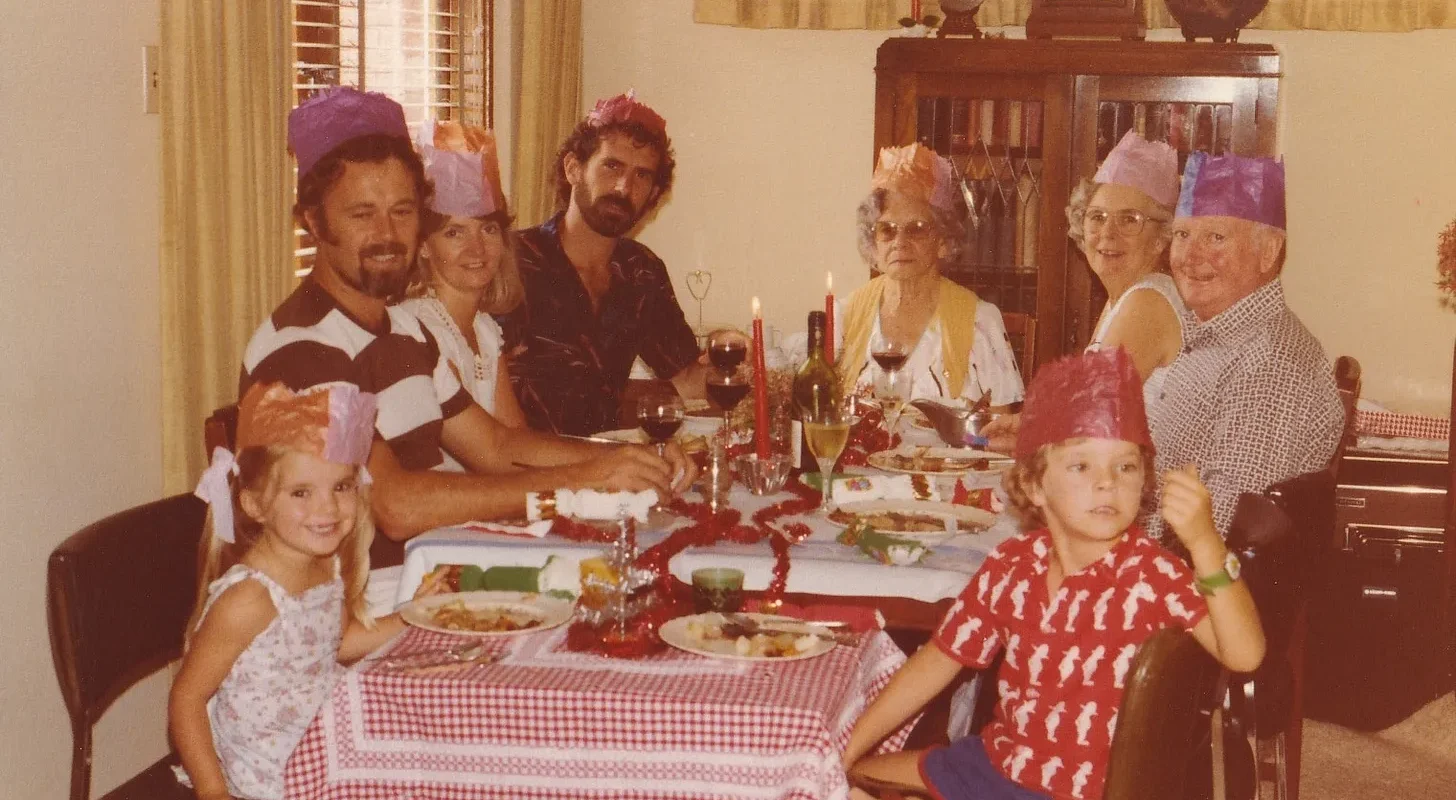
It was 1984. My husband and I had arrived back in Australia from London a few years earlier and were still adjusting to the novelty of a warm Christmas Day. My mother had planned a family lunch for eleven at her home in Epping. I knew she would be orchestrating the day with military precision, ensuring that every dish was plentiful and perfect.
On Christmas Eve, my husband and I went for a drink at a bar in Glebe, where we were living at the time while he studied philosophy at the university. It was crowded, the air thick with noise and conversation. We managed to find two stools at the end of the bar. Squashed into the corner beside us was a tall, thin man about 60 years old, with a straggly beard and unruly grey hair.
Conversation struck easily. It was deep, intelligent, and at times passionate. The hours slipped by unnoticed until we finally stood to leave. As we turned away, I heard my husband ask, almost casually, ‘What are you doing for Christmas?’
The reply was soft, measured.
‘I’m having a quiet day on my own.’
‘Well, why don’t you join us?’ my husband said. ‘One more can easily be accommodated.’
The man’s face lit up with surprise and relief as he accepted.
I rang my mother to tell her there would be an extra guest.
‘All right,’ she said. ‘Who is your friend?’
‘Robert, someone we met. You’ll like him.’
‘Well,’ she replied warmly, ‘that’s what Christmas is all about.’
On Christmas morning, we picked him up at his boarding house in Glebe and drove the twenty-five kilometres to Epping. He was dressed neatly in casual trousers with worn cuffs, a striped shirt, and a jumper beneath a well-worn jacket. He carried a small bag. I was anxious about how he would adjust to our family.
The house was alive with noise when we arrived. My nephew, aged nine, and my niece, seven, were beside themselves with excitement over their presents. My parents, grandmother, sister and her husband, and my brother-in-law and his wife filled the house with movement and chatter. It was a familiar, chaotic family Christmas.
Robert stepped into this bustle and walked straight to my mother. He introduced himself politely and handed her his gift—an avocado and a mango. This, I realised, had been intended as his entire Christmas lunch.
We gathered around the tree with cups of tea and coffee while my father presided over the distribution of presents. My mother, thoughtful as ever, had wrapped a small gift for Robert. When his name was called, my niece dutifully ran over and placed it in his hands. His expression—part disbelief, part gratitude—was quietly moving. He smiled, said thank you, and held the parcel as if it mattered greatly.
Lunch was the traditional roast, with all the trimmings. The table was dressed in Christmas cheer, crackers laid carefully at each place, wine poured, and condiments passed back and forth. Everyone made an effort to include Robert in the conversation, and he responded easily, warmly, and engagingly.
Then a small voice broke the meal’s rhythm.
‘Mum,’ my niece said, ‘his jumper has holes in it.’
The table fell briefly silent. No one quite knew where to look. Robert smiled and continued eating, unperturbed. From the way he focused on the food, I had the strong sense that he had not enjoyed a meal like this for some time.
Looking back now, I see that the true meaning of Christmas was present that day. A stranger was welcomed without question, treated with warmth and dignity, and made to feel he belonged. As the afternoon wore on, Robert relaxed completely, telling the children stories of magic and adventure that held them spellbound. He was clearly a learned man, and his intelligence revealed itself naturally in conversation.
One of my strongest memories from that day is of my sister-in-law sitting quietly on the back porch, carefully darning the holes in Robert’s jumper.
The day ended, but its warmth lingered. The following week, Robert wrote to my parents. His letter captured, better than I ever could, the essence of what that Christmas had meant.
Glebe, 1985
I want to thank you for receiving me so graciously on Christmas Day. I thoroughly enjoyed myself: but in addition, I always feel it is something special to be able to witness a family in action, or in full flight.
The following day, The Australian devoted its leading article to celebrating the family, and I found it particularly persuasive after my stay with you.
But the institution seems to be under some threat at the moment. Whilst everyone at some time of their lives is in a traditional family situation, at any one time only 30% are living so.
Again, thank you for your warm hospitality, and may the year bring much to celebrate.
Yours sincerely,
Robert